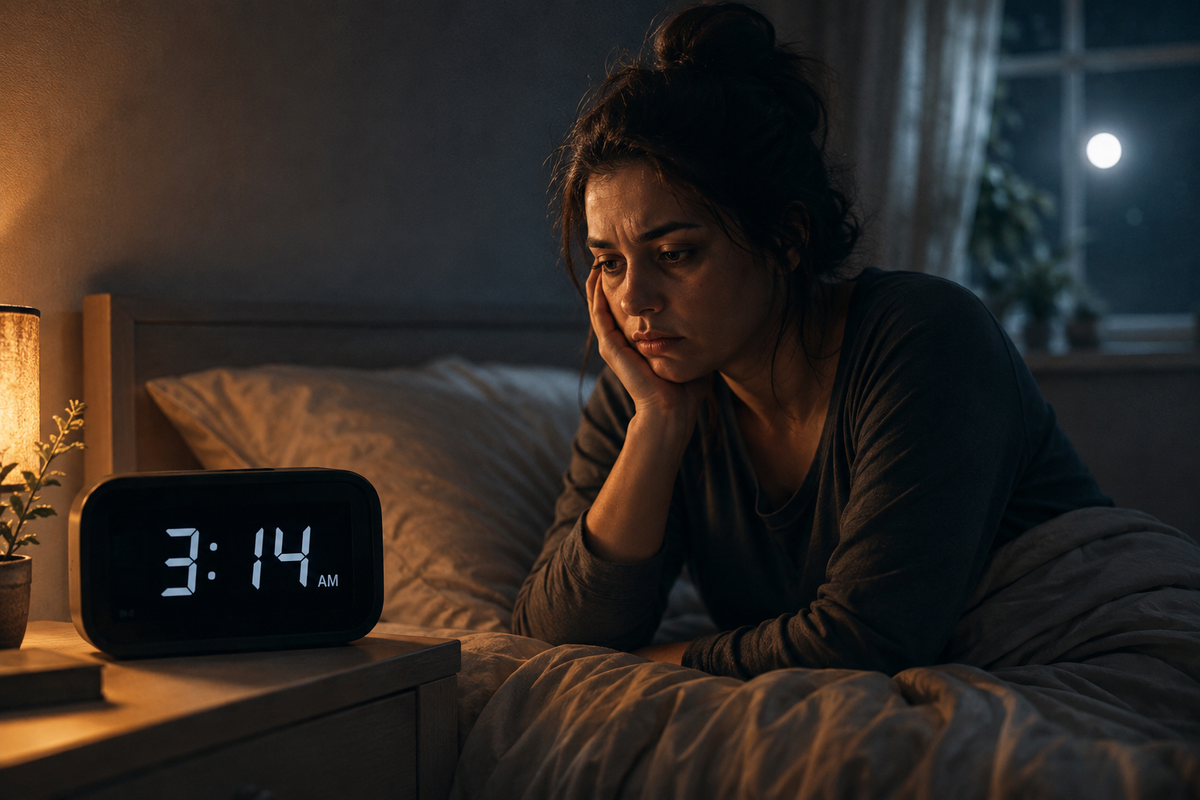
Your Sleep Happens in Cycles, Not One Long Block
A night of sleep isn't one continuous state — it's a series of 90-minute cycles moving through light sleep, deep sleep, and REM. Between each cycle there's a brief, natural window where the brain is closer to the surface of wakefulness. Most people pass through this window without noticing. Some people wake up fully.
Why the Same Time, Almost Every Night
Sleep stages change throughout the night, and your circadian rhythm also follows a roughly 24-hour pattern. That can make awakenings feel predictable, but the exact timing varies from person to person and can also be influenced by bedtime, wake time, environment, stress, substances, medications, and other factors.
Three things tend to determine whether you sleep through that gap or wake up at it:
- Circadian timing — your internal clock helps regulate when you feel sleepy and alert
- Stress and arousal — worry, a busy mind, or other sources of arousal can make a brief awakening harder to move past
- Sleep environment and habits — light, noise, temperature, caffeine, alcohol, and irregular schedules can all affect sleep
Why There Isn't One Universal Fix
Advice such as keeping the room dark, avoiding a clock check, or maintaining a regular schedule can be useful, but repeated nighttime waking can have many contributors. A supplement is not automatically the answer, and persistent sleep problems deserve a broader look.
What Tends to Help
- Keeping a consistent wake time, even on weekends, to stabilize your circadian rhythm
- Cooling and darkening your bedroom (see our sleep habits guide)
- If you're considering a supplement, evaluating the ingredients, claims, directions, and limitations before buying — our YU Sleep review shows how we approach one product
If You're Already Awake at 3AM Right Now
Read our guide on 7 ways to fall back asleep fast for what to actually do in the moment.